Download the Article here.
Press Contact:
For media inquiries about the news, please contact David Deady
The use of multimodal biometric systems is surging, bringing greater security and accuracy to a wide range of industries and use cases.
Indeed, multimodal systems are now an indispensable tool for enabling the flow of people and goods throughout the global economy, allowing national governments to provide a wide range of services to their populations and aiding law enforcement in the reliable identification of citizens and visitors.
Multimodal biometric systems utilize two or more biometric identifiers — fingerprints, face, iris, voice, vein patterns — to verify an individual’s identity. This contrasts with unimodal systems that rely on a single biometric trait. Multimodal systems offer a wide range of advantages, including:
- Greater Reliability – if one biometric modality fails, such as a facial image captured in poor lighting, the second serves as a fallback, creating a more resilient system
- Increased Security – it is more difficult to fake or ‘spoof’ a multimodal biometric system than a single-trait system
- Proven Accuracy – the combination of traits provides higher accuracy and lower false acceptance/rejection rates
Multimodal’s “layered approach” for identifying a specific individual greatly improves accuracy. When absolute identification is critical, for use cases such as finance, health care and border control, multimodal may be essential. In a multimodal system fingerprints provide the foundational reference point, delivering the highest level of accuracy, particularly across large populations.
The Limitations of Modern Facial Recognition
The rise in the use of facial recognition as unimodal systems can be attributed to their ease of use and subjects’ familiarity and comfort with photo taking. But, with this convenience comes reduced accuracy.
Under ideal testing conditions, such as the NIST Face Recognition Technology Evaluation (FRTE), facial recognition systems can achieve an overall accuracy rate of >99%. But this level of accuracy is not matched in the ‘real world’. Accuracy decreases if images are captured in poor lighting, at an angle, or if subjects are wearing accessories such as glasses or masks.
Specific demographic groups, noticeably darker-skinned people from Asian or African/African American ethnicities, are 10 to 100 times more likely to be misidentified.2 Such Non-white demographic groups resulted in both false-positives (incorrect association with an identity), and false-negatives (failed association). This deficiency is a result of algorithm training data being too small or non-representative of society’s demographics.
Though the accuracy rate for accurately identifying diverse ethnic groups is increasing, a gap remains that may be unacceptable for critical use cases such as law enforcement or national identification.
Facial recognition accuracy drops as the size of the database increases and the chance of finding close look-alikes increases. This makes identifying individuals harder, and error rates increase groups underrepresented in the database including women, those with darker skin tones and the elderly. Nonetheless facial recognition remains a popular choice given its ease of use and ability to identify individuals at a distance or in crowds.
Fingerprints: The Original—and Still the Gold Standard
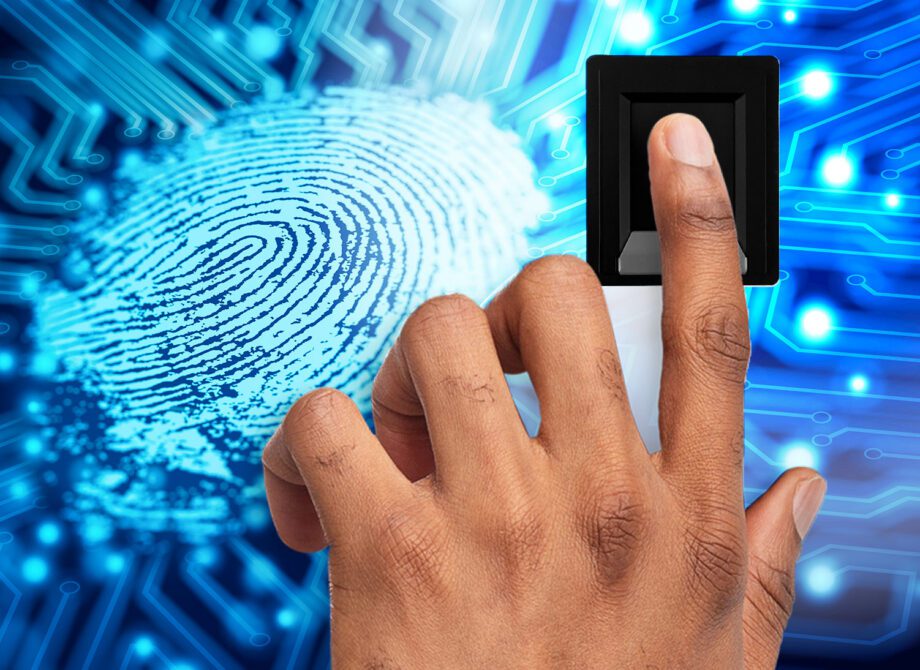
Fingerprints were the first biometric marker leveraged to provide the ability to identify individuals. Highly reliable, unimodal fingerprint systems reach 99.9% accuracy for 4 finger tests and 99.6% with only two fingers.3 For this reason, fingerprints remain the gold standard for identification, especially for critical use cases.
Fingerprints are unique to each person, even the print on each finger is unique. Moreover, they are permanent and do not change throughout the subject’s lifetime. Fingerprints have an exceptionally low false acceptance rate. They typically serve as the primary identifier for an individual throughout their lifetime.
Additional advantages of fingerprints (or palmprints) include:
- Cost-effectiveness: large volumes of prints can be collected by affordable systems with long service life
- User familiarity: as fingerprints serve as one’s primary identifier through life, subjects are often familiar and comfortable with the fingerprint capture process
- Uniqueness: fingerprints provide unique physiological data (ridges, valleys, minutiae) that complements other modalities, creating more robust systems
- Database Access: Fingerprints have been used by governments since the 1800s and now form the world’s largest and most comprehensive biometric databases. This is crucial for law enforcement and border security, enabling matching against massive repositories such as the FBI’s Next Generation Identification (NGI) system, which contains more than 160 million fingerprint records.
- Large Database Performance: Fingerprints are the more reliable trait for large database searches, due to the uniqueness of everyone’s print.
IB’s Strategic Advantages for Multimodal Solutions
Lightweight
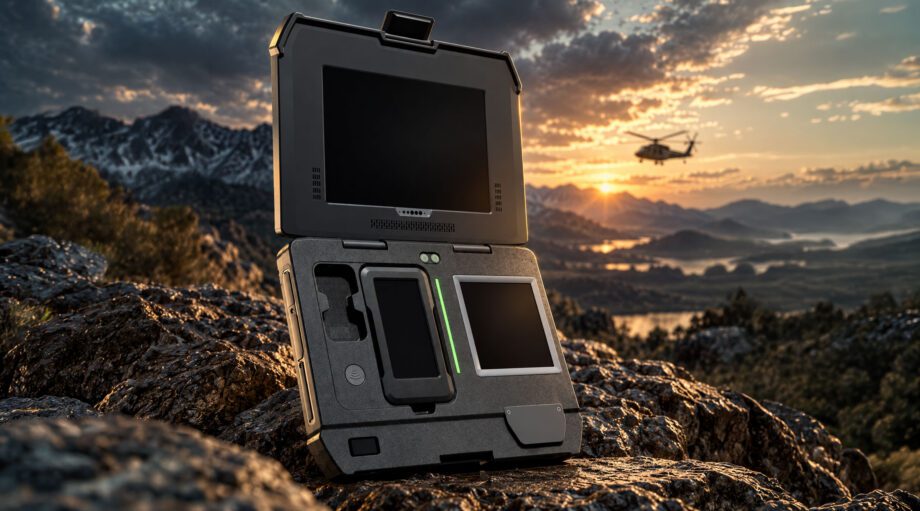
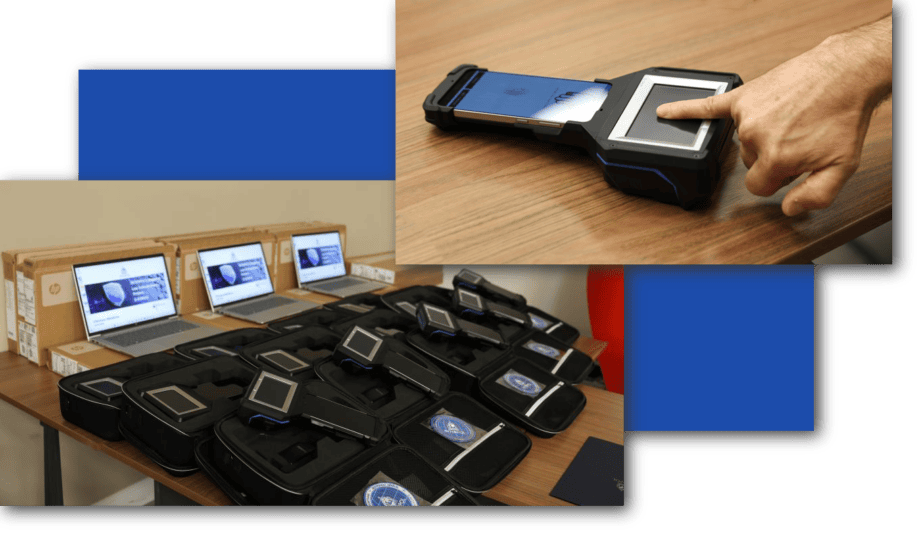
Integrated Biometrics’ scanners use patented Light Emitting Sensor (LES) technology to deliver FBI‑certified fixed and mobile fingerprint imaging in an exceptionally durable, lightweight form factor. Because LES scanners do not require a fragile, bulky glass prism, they provide maximum mobility and a significantly smaller device footprint. This Active Optical technology is an optical direct imaging method and is FBI Appendix F / PIV certified.
Rugged
LES-based devices deliver superior image quality in both direct and indirect sunlight and are highly resistant to contaminants such as grease, oil, water, dust, and chemicals. With extremely low power consumption and durability exceeding U.S. military specifications, IB scanners are purpose‑built for the most rugged and remote operational environments. To increase the security of personnel during night operations, IB scanners do not emit light during fingerprint capture.
Encryption
IB scanners feature 256‑bit AES encryption. Communication between the scanner and external devices or applications is secured using AES keys and RSA algorithms, creating a fully closed-loop data‑protection architecture. Onboard security chipsets, public/private key structures, and industry best practices ensure biometric data remains protected from capture to host application.
IB’s encrypted scanners also include tamper‑protection through a unique calibration file installed in each serialized unit during production. Any attempt to bypass device security — such as disassembly or hardware damage — alters the calibration and renders the captured imagery unusable.
Ultra–Low Power Requirements
Integrated Biometrics’ LES technology is engineered for exceptionally low power consumption, making it ideal for battery‑dependent and portable multimodal solutions. Legacy optical scanners require high-intensity lighting and large power draws, LES sensors activate only at the moment of contact, conserving energy without compromising image quality. IB’s Active Optical devices using LES can operate for extended periods in the field, while reducing the overall size and weight of host systems, and enabling reliable identification capabilities in locations where power sources are limited, intermittent, or unavailable.
About Integrated Biometrics
Integrated Biometrics (IB) is a global leader in advanced biometric technology. Renowned for revolutionizing fingerprint scanning through its proprietary, FBI-certified Light Emitting Sensor (LES) technology, the company delivers cutting-edge fingerprint scanners, seamless biometric system integration software, contactless fingerprint capture, and comprehensive identity management beginning with infant identification solutions.
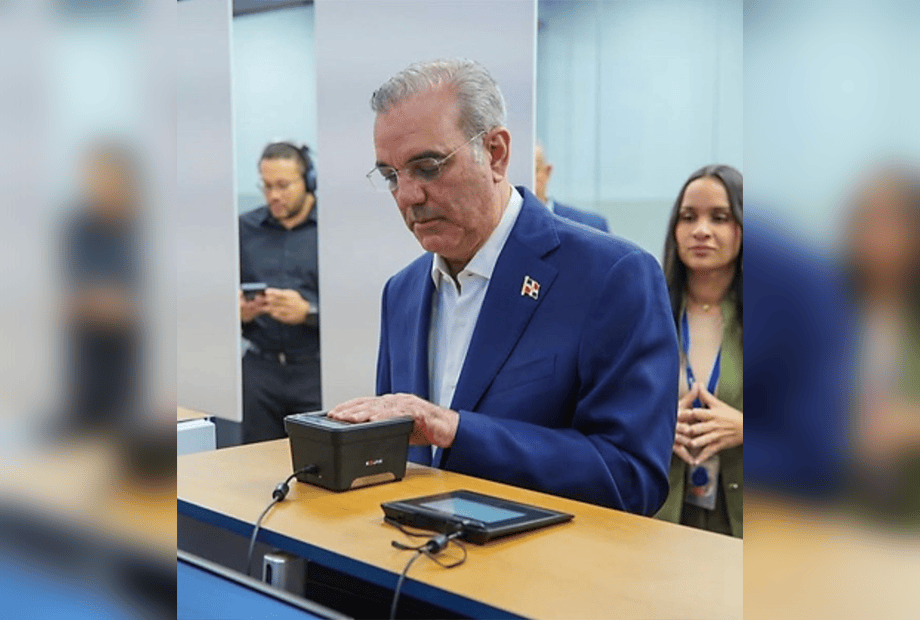
Trusted by organizations worldwide, Integrated Biometrics serves critical sectors such as law enforcement, military, election validation, financial services, and national identity programs. Its robust, high-performance products enable fast and accurate enrollment, identification, and verification, even in remote and extreme environments. IB continues to redefine the possibilities of biometrics—Impacting Lives Through Identity.